
WEBINAR SERIES
September 2021 – May 2022
Access recordings by clicking link on the title
| Date | Speaker | Title |
|
Sept 1st, 2021 |
Pedro Pablo Cardoso
|
The cash of modernism and postmodernism in social activism: the ongoing case of the protesters in Colombia and the weaponization of systemic tools |
| Sept 29th 2021 | Pam Sydelko | A Viable System Model Board Game for Designing Interagency Responses to Wicked Problems |
| Oct 13th. 2021 | Robin Asby | Thinking Systems |
| Nov 10th. 2021 | Mark Lambertz | “Let’s build a productive social system by connecting people’s needs and technology’s capabilities – and get the job done.” |
| March 2022 | Steve Brevis | ‘the digital unwrapping of capital’ |
| April 20 2022 | Alan Rayner | Natural Inclusion: the receptive simplicity on the heart of complexity and a compassionate regenerative and creative community life |
| May 11 2022 | Jose Perez-Rios | how to make a fast diagnosis of a complex organization with Organizational Cybernetics |
| May 25 2022 |
Roger Duck and Jane Searles |
Prof. Jose Perez-Rios
How to make a fast diagnosis of a complex organization with Organizational Cybernetics? Framework and Tools.
May the 11th, 2022, 5:00-6:30 pm (GMT summer time)
In this presentation, we will comment on using a framework to help quickly diagnose any organization’s viability or provide the guidelines for its design. We will describe some specific tools and software that may help in those tasks with some examples.
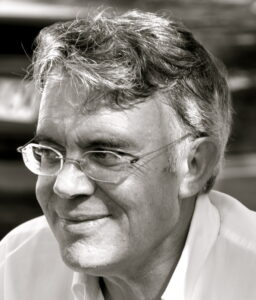
Jose Perez Rios is a Full Professor of Business Organization. He has been Director of International Relations (2000-2006) at the University of Valladolid (Spain). He has also been the Technical Director of the HORIZONTE-2000 project, and Founder and Director of the IBERFORA Project (sponsored by the BSCH) at the University of Valladolid. His research is focused on applying system dynamics and organizational cybernetics to the study of complex systems and the development of software tools that can facilitate the application of different systemic approaches and knowledge capture, communications, and information exchange. He has also been responsible for the creation of the VSMod® software (to facilitate the application of the Organizational Cybernetics and the Viable System Model).
He has worked on multiple national and international research projects. He has more than 80 publications in national and international journals and congresses, and five books, including “Diseño y diagnóstico de Organizaciones viables” (Iberfora2000, 2008) and “Design and Diagnosis for Sustainable Organizations. The Viable System Method” (Springer, 2012). Honorary distinctions: “The Kybernetes Research Award” (2006) awarded by the World Organization of Systems and Cybernetics (WOSC), “Outstanding reviewer” for the journal Kybernetes and the “Honorary HSSS Award as Distinguished Scientist” (2007) by the Hellenic Society for Systemic Studies (HSSS). He is also a Fellow of the HSSS, a member of the Board of Directors of the WOSC (World Organisation of Systems and Cybernetics), and Academician of the International Academy of Systems and Cybernetic Sciences (IASCYS).
Roger Duck and Jane Searles
Designing Freedom Together
May 25th, 2022. 5:00-6:30 pm UK (BST)
This webinar will present a recent paper from the authors, which tells the story of developing, collaboratively, a visionary whole system transition architecture within a UK regional transport context in 2021. It is writ- ten, in the first person, by the two authors whose focus of interest is in complex living systems, characterised by emergence, abundant creativity and surprise. They view design as an inherent aspect of ongoing change, which can be built intrinsically into the living system, not as a stage in a sequential procedure. They view themselves as participants in the system as well as providers of the under- pinning methods.
The objective of the work was to enable evolutionary systemic change, which holds the potential for transformation. The overall approach was rooted in collaborative visioning. The authors see vision as an aspirational and yet responsIble sense of the future which is shared by multiple people, and acts as a reference point for developing agreement and coordinating action. The architecture was developed iteratively in an outside-in approach starting from the systemic con- text and aims to enable everyone to be both choreographers and dancers, find- ing and optimising their contribution based on their unique capabilities and characteristics.
The approach reframes boundaries as opportunities for mutual learning, in contrast to barriers to be overcome or connections to be engineered, and it raises questions of where boundaries could be designed, including the boundaries around organisations themselves. It enables collaborative activities to be identified which cannot be handled by transactional interaction alone.
The authors welcome dialogue to feed a process of mutual learning with others.
Roger Duck works mostly as a consultant through his own business, drawing on systemic ideas to help people learn together to take effective action. In recent years his work has focused on processes of change and transition in organisations, and the wider systems in which they operate. He is motivated to humanise the way we organise, and he has been particularly influenced by Stafford Beer’s thinking. He has consulted to a wide range of public and private sector organisations, especially in relation to transport, energy and telecommunications, working as a facilitator, researcher and innovator to support processes of change. He has been Director of Professional Development for SCiO (Systems and Complexity in Organisation). He served on the steering group of Great Britain’s Future Power System Architecture (FPSA) project (phase 2). He also has experience in local community development through his association with the International Futures Forum (IFF) which led him to co-found an experiment in relationship-building for community wellbeing. He is certified by the International Bateson Institute (IBI) as a warm data host. He and Jane Searles published an article called Designing Freedom Together in 2021, describing a case study of enabling collaborative exploration of transformational systemic change. He can be reached at roger.duck@mapsar.co.uk.
Jane has been continuously developing a systemic modelling approach based on co-design workshops over the last 30 years, in the role of systemic architect. The basic method was developed originally within International Computers Ltd which was an amalgamation of UK Computer Companies in the 1960s, and later in Fujitsu which took over ICL. The modelling approach was originated by Graham Pratten as a business process oriented approach to software architecture design. Jane adapted this approach in the early 1990s to address whole systems, which had customers / citizens at their heart and focussed on people and effective teamwork (and enabling technology where useful). Having been introduced to the Viable System Model in the early 1990s, Jane found that both approaches could usefully be combined to address transformative change towards a visionary future where citizens are central, using the systemic modelling approach to question deeply help assumptions about the way things were done, before proceeding to a systemic transition architecture, comprising multiple VSMs playing roles in an overall system. The approach uses the VSM, in design mode, to structure models of coherent systems which span organisational boundaries and deliver on customer needs. She used this approach, for example, in modelling the overall Criminal Justice System, and the contribution of Magistrates Courts and of Probation to this system as a coherent whole. Jane was the Membership secretary and Board secretary for SCiO for many years, where she first met Roger, and they have been collaborating using and developing this approach over the last 10 years. They have worked together on a community project, ‘Thriving in Fife’ with International Futures Forum (IFF) and have previously used the approach outlined to model an aspirational UK power system which addresses the issues facing communities, industry and commerce and our planet. They have recently published ‘designing freedom together’ which focusses on systemic modelling work done prior to developing systemic designs based on VSM principles. Jane can be reached on: jane.searles@btinternet.com.
September the 29th, 2021
Pam Sydelko.
A Viable System Model Board Game for Designing Interagency Responses to Wicked Problems
Government agencies struggle to address wicked problems because they are open-ended, highly interdependent issues that cross agency, stakeholder, jurisdictional, and geopolitical boundaries and structuring an effective multi-agency organization to tackle them is challenging and there aren’t systemic methodologies supporting such efforts. This paper explains an innovative multi-methodological approach combining Boundary Critique and a novel use of the viable system model (VSM), implemented through a board game, to design an interagency meta-organization that would be capable of more effectively addressing a wicked problem: international organized drug crime and its interface with local gangs in Chicago, USA. This systemic approach allowed multiple agency representatives to intimately interact with their representation of the wicked problem and with each other in order to clearly delineate multi- agency responsibilities, communication mechanisms and channels, adaptive operations management, and an anticipatory function – all tailored to address the wicked problem they had structured as a group. The research findings indicate that this VSM board game, used as part of a larger mixed-method systemic intervention, offers significant promise for the design of interagency responses to wicked problems.
Pamela Sydelko is President of Fat Node Consulting and a systems scientist with nearly 30 years working for Argonne National Laboratory. As the director of the Systems Science Center at Argonne, Ms. Sydelko ran Argonne’s Systems Science Center, a group of talented systems analysts and engineers. During her career, she has led the design and development of numerous integrated systems applications spanning such diverse domains as national security, environmental sustainability, and critical infrastructures. As president of Fat Node Consulting, Ms. Sydelko continues to practice systems science with a focus on systems thinking approaches to extremely complex “wicked” problems. Her passion is the use of systems thinking by governments, communities, private industry and other organizations to help them better understand and manage complexity in their environments. To expand her knowledge of systems science and to improve her expertise in the application of systems theory and methods, she began a PhD program at the Centre for Systems Studies, University of Hull, United Kingdom. She also earned her MBA from the University of Chicago, holds an M.S. in Soil Science from the University of Illinois at Urbana-Champaign, and received her B.S. in Botany/Ecology from North Dakota State University.
Oct 13th 2021, 5:00-6:30 pm (GMT)
Dr. Robin Asby
‘THINKING SYSTEMS’
This newly launched book from Robin, will demonstrate that we are all thinking systems in the processes of living in our world, as postulated by Eastern philosophies. The book shows that if we are each able to accept the alternative perspectives of other thinking systems, and synthesise our understandings with the traditions of Western Science then we will find a way of thinking which will solve the problems we have created. ‘Thinking Systems’ explores the subject of Systems Thinking from a process perspective and concludes that this perspective is of great power, able to produce new insights, and in particular insights into the problems that mankind faces in the stewardship of our planet. The approach will enable those interested in Systems Thinking to understand why to think differently a process-based approach is necessary, and will show why it is of value to science in any field where process analysis is necessary. In the first chapters of the book the reader is introduced to Systems Thinking and the systemic process modelling of learning and managing. Part 2 describes the results of applying the thinking to two areas where problems of understanding exist: governing, and Quantum Mechanics. Whilst these two areas are far apart in the academic world, in each case surprising insights result from this systemic process approach.
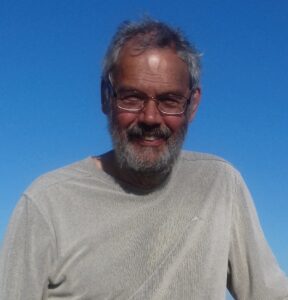
Robin Asby obtained a degree in Mathematics from Cambridge University (1965), and a PhD from London University (1968) in Mathematical Physics. In his career he has held posts in a number of U.K. universities and one in Rochester NY in the United States. The first eight years of his career were spent in research physics, then 16 years in education, training teachers, whilst also becoming a political activist as a result of the experience of living and working in the United States. Subsequently for a short time he worked in the information technology industry before rejoining the academic world to help in the establishment of a new business and management department. In 1999 he became a freelance consultant and researcher. As a result of his interest in education he has been an external examiner in HE, and a governor of two secondary schools and in both has held the position of chair. In 2018 he was a founder member of Todmorden Learning Centre and Community Hub (tlchub.org.uk). TLCCH is currently in the process of establishing a learning centre for research, development, and practical learning in the former Todmorden Community College with the aid of support from The National Lottery Climate Action Fund, for those interested in finding employment in the new industries building climate change resilient communities. His major research interest is in the development of understanding in Systems Thinking – thinking in complex interconnected problem situations which involve many people and different cultural perspectives. He supervised a number of doctoral students for Hull University and subsequently one for the Open University and another for Portsmouth University. From 2007 he chaired the development of the Open University MSc ‘Systems Thinking in Practice’. He was a joint author of one of the courses in this degree ‘Thinking Strategically: systems tools for managing change’ and has undertaken consultancy work in the area of change management. A book, ‘Thinking Systems’ the results of many years of research is shortly to be published by Triarchy Press.
November 10th, 2021, 5:00-6:30 pm
Mark Lambertz
“Let’s build a productive social system by connecting people’s needs
and technology’s capabilities – and get the job done.”
The session offers a perspective on how to use the VSM as a framework for holistic data-informed decision making (= sense making). Basically, the VSM is presented as a canvas to map different metrics & key performance indicators into a dashboard. Not only a theoretical concept will be presented, but also a real life implementation, including the ups and downs of building and using such a dashboard. Next to the mapping part further remarks will be provided regarding weak signals, leading indicators vs. lagging indicators and universal power laws (e.g., Logistic Growth, Bifurcation, Loop Archetypes, etc.). Bottomline: It is about Ashby’s Law in Action, which is nothing more and nothing less than observing evolution on its different, parallel existing time-levels.
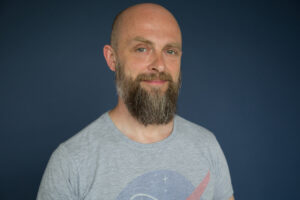
Career history
04/2021 until today – Global Lead Digital Touchpoints & eCRM, METRO AG – Responsible for standardized touchpoints, eCRM measures and corresponding ways of working in 24 countries.
12/2020 until 03/2021 – Agile Coach & Operational Program Lead, METRO digital GmbH (IT Organization of METRO AG)
10/2019 until 11/2020 2015 – 2019 – Agile Master, METRONOM GmbH (IT Organization of METRO AG)
2016 – 2018 – Freelance Senior Agile Coach, Author, Speaker, www.organisation.io and lectureship in Corporate Management (Lean Startup and Viable System Model) and project management (from Waterfall, Prince2, Kanban to Scrum & Co.), MD.H Düsseldorf
1995 – 2015 – Co-Founder and Managing Director, anyMOTION GRAPHICS GmbH
Expertise
Leading large projects/programs and enabling value-driven decision making, Development of Governance Structures for the Creation and Implementation of Global Standards, Agile Coaching, Lean Methodologies, Agile Transformation, Organizational Design, Scaled Agile, Customer Experience Design (incl. UX), Value Stream Design, Systems und Design Thinking, Supervision,Team-Coaching, Viable System Model
Publications and Blog: https://intelligente-organisationen.de
Dr Steve Brewis
y=f(x) … ‘the digital unwrapping of institutional capital’
March 2nd, 2022. 5:00-6:30 pm (UK winter time)
I will use the lens of y=f(x) to demonstrate how I was able to develop a digital strategy for a American company and show how I was able to recursively digitally unwrapping its ‘institutional capital’ leading to improvements in self-awareness, agility and decisioning effectiveness.

Stephen Brewis recently retired from his position of Chief Research Scientist at BT where he was responsible for improving the organisational structure of the network operations unit which was tasked with decommissioning the UK’s switching network. After leaving BT stephen took up a visiting fellow position at the Khalifa University in Abu Dhabi where he was responsible for building of an epidemiological model of the UAE. Recently stephen has setup his own business called ‘The Infinite Game’ to contrast with finite games where the focus is on the ‘organisational’ . Stephen is currently working for an American Company designing and implementing a digital strategy to improve decisioning effectiveness and operational agility.
Dr Alan Rayner
Natural inclusion: The receptive simplicity in the heart of complexity and a compassionate, regenerative, and creative community life
April 20th 2022, 5:00-6:30 pm (UK summer time)
In this presentation I offer the fundamental natural evolutionary principle of ‘natural inclusion’ as a simple way to understand the complexities of the natural world in which we human beings are dynamically included. In summary, natural inclusion can be described as the receptive-responsive relationship between intangible spatial stillness and energetic motion in the being, becoming and evolutionary diversification of all material bodies, including our own.
For millennia this understanding has eluded us due to the prevalence of a definitive mode of perception, and associated abstract rationality, which either objectively isolates or conflates the human observer from or with what is observed. Such perception effectively removes the central coordinating influence, by way of the innermost spatial receptivity, which exists in the gravitational core of all natural organisations, from sub-atomic to galactic in scale. Consequently, the default condition of Nature is paradoxically presupposed to be either static or random, whereupon movement and order are believed primarily to be brought about by executive mechanical force situated somewhere ineffable. Many modern scientific concepts and governmental paradigms continue to be founded on this divisive and/or oppressive belief, including Darwinian ‘natural selection’. These are a source of profound misunderstanding as well as psychological, social, and environmental harm.
We will have hope of release from the iniquities, paradoxes, inconsistencies, and falsities of objective rationalisation only when we recognise the receptive influence of omnipresent space and the responsive flow of energetic information around every body. Only then will a truly compassionate, creative, and regenerative way of life become possible.